
We may earn money or products from the companies mentioned in this post.
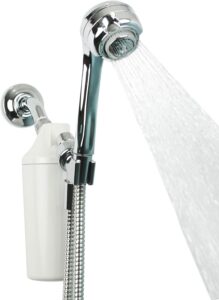
Aquasana shower filter review: The Aquasana Shower Water Filter System is designed for households that want to reduce chlorine exposure in shower water without installing a whole-house filtration system. It attaches directly to the shower plumbing and uses replaceable filtration media to treat water before it reaches the showerhead.
Its main selling points are chlorine reduction, a relatively high rated flow rate, straightforward installation, and a filter capacity designed to last for thousands of gallons. But it is important to understand what a shower filter can—and cannot—do before buying one.
In this review, we’ll examine how the Aquasana shower filter works, chlorine reduction, filtration technology, flow rate, filter life, installation, maintenance, advantages, limitations, and how it compares with other shower filtration options.
Check the Aquasana Shower Filter on Amazon
Aquasana Shower Filter Review: Quick Verdict
The Aquasana Shower Water Filter System is worth considering if chlorine reduction is your primary goal and you want a point-of-use solution specifically for the shower.
It doesn’t require the plumbing changes associated with a whole-house filtration system, and installation is considerably simpler for most households.
Best for: Homes using chlorinated municipal water where the primary goal is reducing chlorine in shower water.
Less suitable for: Homes needing water softening, comprehensive whole-house contaminant treatment, or treatment of microbiologically unsafe water.
What Is the Aquasana Shower Water Filter System?
The Aquasana Shower Water Filter System is a point-of-use filter installed between the shower arm and showerhead.
Instead of filtering all water entering the house, it treats only water used in that shower.
This makes it a much simpler option for someone whose main concern is shower-water quality rather than drinking water or whole-house treatment.
The system uses replaceable filtration media and is designed primarily around reducing chlorine and other contaminants covered by the manufacturer’s current performance specifications.
How Does the Aquasana Shower Filter Work?
Water entering the shower passes through the filter before reaching the showerhead.
The basic process is:
- Water travels through the home’s shower plumbing.
- It enters the Aquasana filter housing.
- The filtration media interacts with contaminants targeted by the system.
- Filtered water exits the housing.
- The water then flows through the showerhead.
This happens using normal household water pressure, so the filter doesn’t require a pump or electrical connection.
Aquasana Shower Filter Filtration Technology
Aquasana has used multi-stage filtration technology in its shower filtration products rather than relying solely on a basic sediment screen.
The filtration process has included media designed to work under shower-water conditions, where temperature and flow rate create different challenges from drinking-water filtration.
The important point is that a shower filter should be evaluated according to its verified performance claims rather than assuming it provides the same contaminant reduction as an under-sink filter or whole-house system.
What Does the Aquasana Shower Filter Remove?
The Aquasana shower filter is primarily marketed around chlorine reduction.
Older marketing for shower filtration products can sometimes create the impression that these systems broadly purify shower water. That’s not the best way to evaluate them.
A shower filter shouldn’t automatically be expected to remove every category of contaminant found in household water.
Instead, compare the current performance specifications for the exact Aquasana model with the specific water-quality concern you’re trying to address.
Does the Aquasana Shower Filter Remove Chlorine?
Chlorine reduction is the primary reason many consumers consider this type of shower filter.
Municipal water utilities commonly use disinfectants to control microorganisms in drinking-water distribution systems. Chlorine can also produce a noticeable odor in shower water, particularly when warm water increases volatilization.
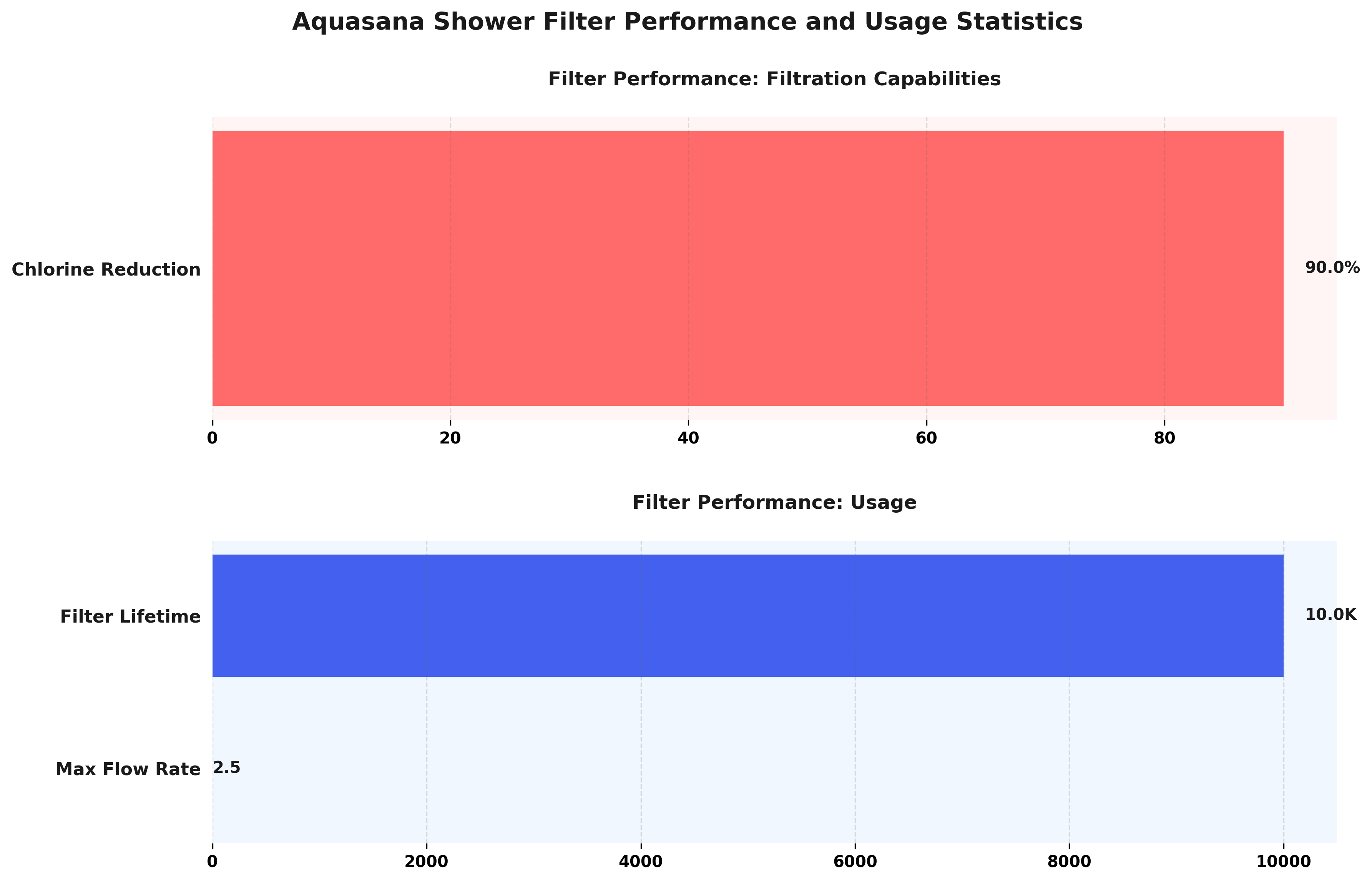
Aquasana has marketed its shower filtration system specifically for substantial chlorine reduction.
If chlorine reduction is your primary reason for purchasing the system, check the current Aquasana performance specifications for the exact model and replacement cartridge you’re considering.
What About Chloramine?
Chloramine is different from free chlorine and can be more difficult for some filtration media to reduce effectively.
Don’t assume that a filter’s chlorine-reduction claim automatically means equivalent chloramine reduction.
If your local water utility uses chloramine rather than free chlorine, verify that the exact filter you’re considering has appropriate performance information for chloramine.
Does the Aquasana Shower Filter Remove Heavy Metals?
The original version of this article broadly stated that the filter reduced heavy metals.
That claim needs more context.
Water filters should be evaluated according to specific contaminant-reduction claims rather than treating “heavy metals” as one universal category.
If you’re concerned about a particular metal, check whether the current Aquasana performance documentation specifically addresses that contaminant.
For drinking-water concerns involving lead or other health-related contaminants, appropriate water testing and a drinking-water treatment system designed for those contaminants may be more important than relying on a shower filter.
Does the Aquasana Shower Filter Remove VOCs?
Volatile organic compounds cover a large category of chemicals with different properties.
It’s therefore better not to assume that a general shower filter removes all VOCs.
If a particular chemical is present in your water, compare that contaminant with the manufacturer’s current performance data and consider treatment specifically designed for it.
Does the Aquasana Shower Filter Soften Water?
No. This is one of the most important limitations to understand.
The Aquasana shower filter is not a conventional water softener.
It shouldn’t be expected to substantially remove the dissolved calcium and magnesium responsible for water hardness.
If your main shower problem is mineral scale, hard-water spots or soap performance caused by high hardness, filtration and softening are different treatment processes.
Our guide to water filters for hard water explains the distinction in more detail.
Can It Prevent Scale Buildup?
Because the Aquasana shower filter isn’t a traditional ion-exchange water softener, it shouldn’t be purchased with the expectation that it will eliminate household hardness.
Hard-water scale comes primarily from dissolved minerals such as calcium and magnesium.
If scale is the main problem in your shower, you may need hardness treatment rather than—or in addition to—a shower filter.
Aquasana Shower Filter and Skin
One of the most common reasons people shop for shower filters is concern about how shower water feels on their skin.
Reducing chlorine can change the odor and characteristics of shower water, and some users may prefer showering with less chlorinated water.
However, we wouldn’t treat a shower filter as a medical treatment for dry skin, eczema, irritation or other skin conditions.
Skin problems can have many causes, including water temperature, soap and cleanser choice, bathing duration, environmental conditions and individual skin conditions.
Aquasana Shower Filter and Hair
The same caution applies to claims involving hair.
Some people prefer washing their hair in filtered shower water, particularly when they dislike the chlorine characteristics of their municipal supply.
But claims that a shower filter will automatically produce shinier, healthier or more hydrated hair are difficult to guarantee.
Hard water can also affect how hair feels because calcium and magnesium remain in the water. Since this filter isn’t a traditional softener, it shouldn’t be expected to solve every hair-related complaint associated with hard water.
Does a Shower Filter Help With Hair Loss?
There isn’t a good basis for presenting the Aquasana shower filter as a treatment for hair loss.
Hair loss has numerous possible causes, and a shower filter shouldn’t be marketed as a medical solution.
If your concern is simply chlorine odor or the feel of your shower water, that’s a more appropriate reason to evaluate this type of product.
Aquasana Shower Filter Flow Rate
The original version of this review referenced a flow rate of approximately 2.5 gallons per minute.
Flow rate matters because adding filtration to a shower creates resistance to water movement.
A filter that restricts flow too aggressively can make an otherwise good shower frustrating to use.
The actual experience can depend on:
- Household water pressure
- Showerhead design
- Condition of the filter cartridge
- Sediment accumulation
- Plumbing configuration
- The current model and flow specifications
Check the specifications for the exact Aquasana model you’re purchasing, particularly if strong shower pressure is important to you.
Aquasana Shower Filter Life
The original product information associated with this article referenced approximately 10,000 gallons of filter capacity.
That doesn’t mean every household will reach exactly the same service life.
Actual replacement timing can depend on:
- Number of people using the shower
- Length and frequency of showers
- Incoming water quality
- Chlorine concentration
- Sediment levels
- Changes in water flow or odor
Always follow Aquasana’s current replacement recommendations for the exact cartridge installed.
How Often Do You Replace the Aquasana Shower Filter?
Historically, Aquasana shower-filter replacement schedules have commonly been discussed in terms of roughly six months of typical use, depending on the model and household consumption.
A calendar estimate should be considered alongside the filter’s rated capacity.
A household with several people taking long daily showers will consume capacity much faster than a one-person household with shorter showers.
Aquasana Shower Filter Installation
Installation is one of the product’s biggest advantages compared with whole-house filtration.
A typical installation involves:
- Removing the existing showerhead.
- Cleaning the shower-arm threads if necessary.
- Installing the Aquasana filter assembly according to the manufacturer’s directions.
- Attaching the showerhead or included shower fixture, depending on the configuration.
- Turning on the water.
- Checking all threaded connections for leaks.
- Flushing the new filter according to Aquasana’s instructions.
No major plumbing modification is normally required for a compatible standard shower setup.
Do You Need a Plumber?
Most installations shouldn’t require a professional plumber if you have standard accessible shower plumbing and are comfortable replacing a showerhead.
However, unusual fittings, damaged threads, concealed plumbing problems or incompatible fixtures can make installation more complicated.
Don’t force connections that don’t fit correctly, as damaged shower-arm threads can turn a simple installation into a plumbing repair.
Will It Work With Your Existing Showerhead?
Compatibility depends on the particular Aquasana configuration and your existing shower setup.
Some versions are designed to work with a separate showerhead, while others may be sold as packages with a showerhead or wand.
Check the current product configuration before ordering, especially if you use:
- A handheld shower system
- A rainfall showerhead
- A dual-head configuration
- An unusually large showerhead
- A nonstandard shower arm
Aquasana Shower Filter Performance
When evaluating performance, focus on the contaminant reductions that actually matter for your water supply rather than the largest possible list of marketing claims.
If your primary concern is chlorine, evaluate chlorine-specific performance.
If your concern is hard water, understand that a shower filter and water softener perform different jobs.
If you suspect a more serious contamination issue, testing your water can help determine whether a point-of-use shower filter is even the appropriate treatment.
Aquasana vs. AquaBliss Shower Filter
Aquasana and AquaBliss both offer shower filtration systems, but product design, filter media, replacement schedules and performance claims can differ.
The best choice depends on the contaminant you’re targeting, replacement-filter availability, installation preferences and ongoing cost.
Read our AquaBliss shower filter review for a closer look at that system.
Aquasana vs. Culligan Filtered Showerhead
The Culligan WSH-C125 takes a somewhat different approach by combining filtration with a showerhead.
A separate inline system such as the Aquasana can provide more flexibility in showerhead selection depending on the configuration, while an integrated filtered showerhead offers an all-in-one design.
See our Culligan WSH-C125 review for more information.
Aquasana vs. Berkey Shower Filter
Both systems target consumers looking for point-of-use shower filtration without installing whole-house equipment.
Compare their current chlorine-reduction claims, filter capacity, replacement cost, flow characteristics and compatibility with your preferred showerhead.
Our Berkey shower filter review covers the Berkey option in detail.
Aquasana Shower Filter vs. Whole-House Filtration
A shower filter treats one fixture. A whole-house filtration system treats water much earlier in the plumbing system.
A point-of-use shower filter may make more sense if:
- Your main concern is one shower
- You rent your home
- You want a lower-cost entry point
- You don’t want major plumbing modifications
Whole-house treatment may make more sense if the same contaminant affects multiple showers, faucets and appliances throughout the home.
Advantages of the Aquasana Shower Filter
- Targets shower water specifically
- Designed primarily around chlorine reduction
- No electricity required
- No storage tank
- Relatively simple installation
- Replaceable filtration cartridge
- Less expensive and invasive than most whole-house systems
- Can work with existing shower configurations depending on the model
Potential Drawbacks
- Doesn’t soften hard water
- Only treats one shower
- Replacement cartridges create an ongoing expense
- Performance varies by contaminant
- May add bulk between the shower arm and showerhead
- Compatibility should be checked with unusual shower setups
- Shouldn’t be treated as a medical solution for skin or hair conditions
Who Should Consider the Aquasana Shower Filter?
This filter may be a good fit if you:
- Use chlorinated municipal water
- Notice a strong chlorine odor while showering
- Want filtration specifically for one shower
- Don’t want to install whole-house filtration
- Want a system that doesn’t require electricity
- Are comfortable with periodic filter replacement
Who Should Consider Something Else?
You may need another treatment approach if:
- Your main concern is hard water
- You want to treat every fixture in the house
- Your water has a serious microbiological contamination problem
- You need treatment for a contaminant not addressed by the filter
- You want comprehensive drinking-water filtration
Aquasana Shower Filter Pros and Cons
Pros
- Designed for chlorine reduction
- Easy point-of-use approach
- Doesn’t require whole-house plumbing changes
- Good rated filter capacity
- Designed to maintain practical shower flow
- Simple cartridge replacement
Cons
- Doesn’t remove water hardness
- Only filters one shower
- Replacement filters add long-term cost
- Not every contaminant is addressed
- Results involving skin and hair are subjective
Is the Aquasana Shower Filter Worth It?
For households primarily concerned about chlorine in shower water, the Aquasana can be a practical point-of-use solution.
Its biggest advantage is that you can address shower-water filtration without installing a large whole-house system.
The decision becomes less straightforward if your actual problem is hard water. A shower filter doesn’t perform the same function as a traditional water softener, so homeowners dealing primarily with scale should investigate hardness treatment instead.
For a broader comparison of available products, see our guide to the best shower water filters.
Frequently Asked Questions
Does the Aquasana shower filter remove chlorine?
Chlorine reduction is one of the primary purposes of the Aquasana shower filtration system. Check the current specifications for your exact model for its current chlorine-reduction performance.
Does the Aquasana shower filter remove chloramine?
Don’t assume chlorine and chloramine performance are identical. If your utility uses chloramine, verify chloramine-specific performance information for the exact filter.
Does the Aquasana shower filter soften water?
No. It isn’t a traditional water softener and shouldn’t be expected to remove the calcium and magnesium responsible for hard water.
Does the Aquasana shower filter help with hard water?
It may address contaminants covered by its filtration media, but it doesn’t provide traditional ion-exchange softening. If hardness and scale are your main problems, consider treatment specifically designed for hard water.
How long does an Aquasana shower filter last?
The original product information associated with this review referenced approximately 10,000 gallons of filter capacity. Actual replacement timing depends on usage, incoming water quality and the current manufacturer’s recommendations.
How often should I replace the Aquasana shower filter?
A replacement interval around six months has historically been associated with typical use for some Aquasana shower-filter configurations, but follow the current recommendation for your exact cartridge.
Does the Aquasana shower filter reduce water pressure?
Any filter can create some resistance to flow. Aquasana shower systems are designed to provide practical shower flow, but actual pressure depends on household pressure, filter condition and the showerhead being used.
Can I install an Aquasana shower filter myself?
Many homeowners can install a compatible shower filter themselves because it attaches at the shower arm rather than requiring major plumbing modifications.
Is an Aquasana shower filter good for skin?
Some people prefer showering in water with less chlorine, but a shower filter shouldn’t be considered a treatment for skin disorders. Skin dryness and irritation can have many causes.
Is an Aquasana shower filter good for hair?
Some users may prefer how their hair feels after showering in filtered water, but results vary. The filter also doesn’t soften hard water, which can independently affect how hair feels.
Is the Aquasana shower filter worth buying?
It can be worth considering when chlorine reduction is your main goal and you want filtration for one shower without installing a whole-house treatment system.
Final Verdict: Aquasana Shower Filter Review
Our Aquasana shower filter review finds that this system makes the most sense for households seeking a relatively simple way to reduce chlorine in shower water.
Its point-of-use design, practical flow rate and replaceable cartridge make it considerably easier to install than whole-house filtration.
Its limitations are equally important. It isn’t a water softener, shouldn’t be expected to remove every possible contaminant, and shouldn’t be treated as a medical solution for skin or hair problems.
If chlorine reduction matches your actual water-quality concern, however, the Aquasana Shower Water Filter System is a solid option to compare with other established shower filters.